
Reviews
Description
Core Concept and Objective
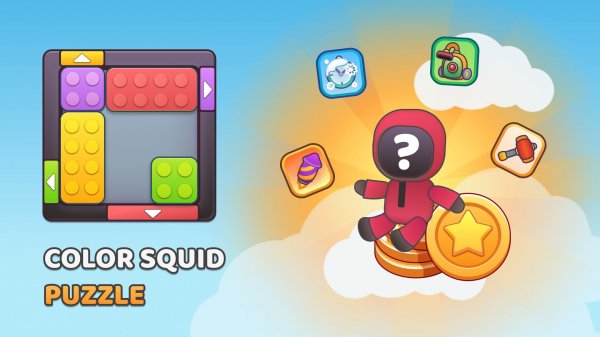
At its heart, this puzzle game revolves around a simple premise: a grid contains various blocks, each with a distinct color and shape. The player’s task is to move these blocks so that each one settles into a corresponding cutout that matches both its color and form. Successfully placing a block removes it from the playing field, gradually clearing the board. What starts as a straightforward exercise quickly evolves into a test of spatial reasoning and forward planning, as later layouts introduce obstacles and require multiple steps to complete.
Controls and Interaction
Players interact with the grid using a mouse or touch input. A block can be selected and slid in any direction, provided the path is clear. This drag-and-slide mechanic feels intuitive and responsive, allowing for precise movements. The absence of a strict timer means users can take as long as they need to consider each move, making the experience accessible to those who prefer a relaxed pace. The interface remains uncluttered, with visual cues that highlight possible moves and matching slots.
Support Tools and Their Strategic Use
To aid progress on more intricate puzzles, several optional helpers are available. One tool pauses any active timer, giving the player unlimited time to assess the situation. Another removes a single block from the grid entirely, which can be useful when a piece is obstructing progress. A third tool clears a section of a block, effectively reducing its size and allowing it to fit into a different slot. Finally, a feature can collect all blocks of a chosen color, instantly clearing them if their matching slots are already free. Using these tools wisely can turn a seemingly impossible layout into a solvable one.
Visual Style and Atmosphere
The game presents a clean, colorful aesthetic with smooth animations. Each block and slot is clearly distinguishable, reducing visual confusion. The background and interface elements are designed to be easy on the eyes, with soft gradients and muted tones that complement the bright puzzle pieces. This visual approach reinforces the game’s calming nature, creating an environment where players can focus without distraction. The gentle sound effects, such as a soft click when a block is placed, add to the overall sense of satisfaction.
Progression and Difficulty Curve
Puzzles are organized into sets that gradually introduce new challenges. Early levels serve as a tutorial, teaching the basic movement and matching mechanics. As players advance, they encounter grids with more blocks, tighter spaces, and configurations that require multiple moves to create a clear path. The difficulty increases steadily, ensuring that players are consistently engaged without feeling overwhelmed. This structure allows for a natural development of problem-solving skills, as each puzzle builds on concepts learned in previous ones.
Benefits for Cognitive Skills
Regular play can help sharpen several mental faculties. The need to visualize block movements before executing them enhances spatial awareness. Planning a sequence of moves to free a blocked slot improves logical reasoning and foresight. Recognizing color and shape patterns becomes quicker with practice. Because the game operates without time pressure, it encourages thoughtful analysis rather than reactive clicking, making it a suitable activity for players of all ages who wish to maintain mental agility in a low-stress setting.




Player Comments
Sign in to comment
You must be logged in before posting a review or rating.
No account? Create one
No comments yet. Be the first to comment!